
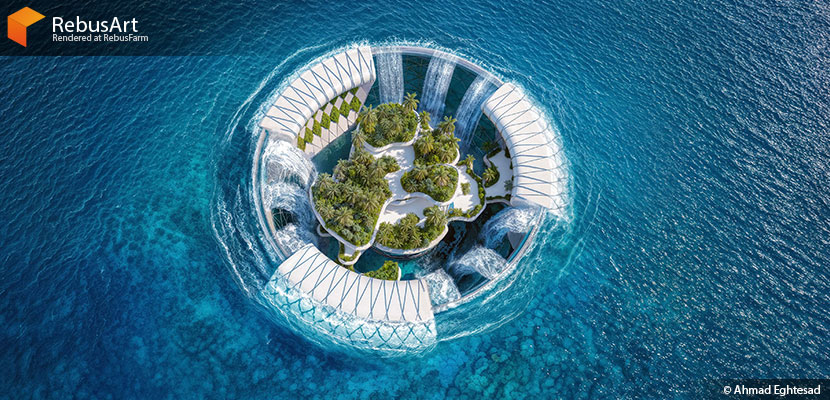
Welcome back to RebusArt, Ahmad! It’s great to have you with us again. When we last spoke in January 2025, we explored your journey as a 3D artist, your passion for storytelling, and the creative vision behind your architectural visualizations. Since then, you’ve brought several impressive new projects to life, including Baobab Waterfall. We’re excited to catch up, see how your work and artistic approach have evolved, and take a closer look at the ideas and creative process behind your latest project.
Introduction.
For readers discovering your work for the first time, could you introduce yourself and share a bit about your background as a 3D artist?
Thank you so much; it is wonderful to be back with the RebusArt community!
For those just discovering my work, my path over the past ten years has always been rooted in storytelling, crafting atmospheric, photorealistic narratives for some of the most ambitious architectural projects around the globe.
Working alongside the talented team at Bucharest Studio has been a defining chapter, allowing me to collaborate on high-stakes international competitions with industry giants like BIG, Zaha Hadid Architects, Foster + Partners, and Snøhetta. Visualizing massive projects like the Qiddiya master plan and World Cup stadiums taught me how to deliver highly detailed imagery under strict deadlines without ever losing the artistic soul of the design.
Next to these massive global collaborations, my heart remains deeply tied to independent conceptual design. Projects like Baobab Waterfall give me the freedom to push boundaries. Today, my workflow is deeply influenced by new tools. By integrating AI into early-stage conceptualization and final polishing, I can explore hyper-futuristic concepts that blur the lines between traditional 3D rendering and digital art. For me, visualization is no longer just about grounding a design in everyday reality; it is about taking a wildly ambitious idea and fully realizing its futuristic potential.
Looking Back.
It's been more than a year since our last interview. Looking back, what have been the biggest milestones or lessons that have shaped you as an artist since then?
If I had to pinpoint one major milestone since we last spoke, it’s navigating the explosion of AI in our industry. It is moving so fast that many old standards have already faded into the background, replaced by new creative realities.
Instead of resisting it, I focused on finding the sweet spot between traditional 3D craft and AI-driven tools. The greatest benefit is how much it accelerates the process. Being able to achieve high-quality results faster means I have far more mental space to explore different iterations and visualize complex ideas.
The biggest lesson I’ve taken away is a complete shift in mindset. I realized that my role as an artist isn't just about simulating reality anymore. It is about pushing the boundaries of pure imagination and making those wildly futuristic concepts feel real.
Has your perspective on architectural visualization changed over the past year? Are there things you approach differently today than you did a year ago?
Yes, definitely. The biggest difference in how I approach projects today comes down to time management and creative freedom
In the past, making an idea look real consumed almost all of our time. You had to commit to a concept early because the technical execution was so heavy. Today, my workflow creates massive space for generating ideas and testing concepts, while the time required to actually bring them to life has drastically shrunk. For artists in our field, this is the ultimate luxury. It means we don't have to settle for the first good idea; we have the freedom to explore, refine, and focus entirely on the narrative before we lock in the final result.
Project Spotlight.
Your latest project, Baobab Waterfall, immediately captures attention with its striking concept. Could you tell us the story behind the project and what inspired you to create it?
The story actually begins with a hyper-futuristic competition hosted by the Jacques Rougerie Foundation. As an architect, being handed total creative freedom is both thrilling and intimidating. When you can design absolutely anything, the hardest part is narrowing down the vision. We realized that to create something truly impactful, we needed to build our own constraints.
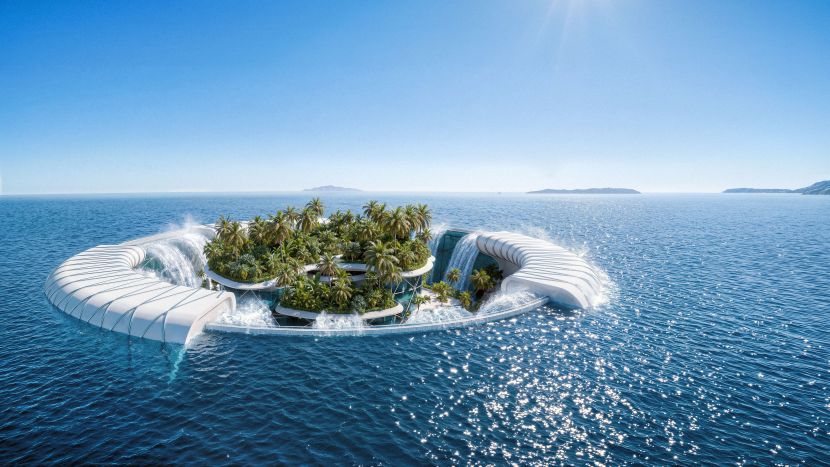
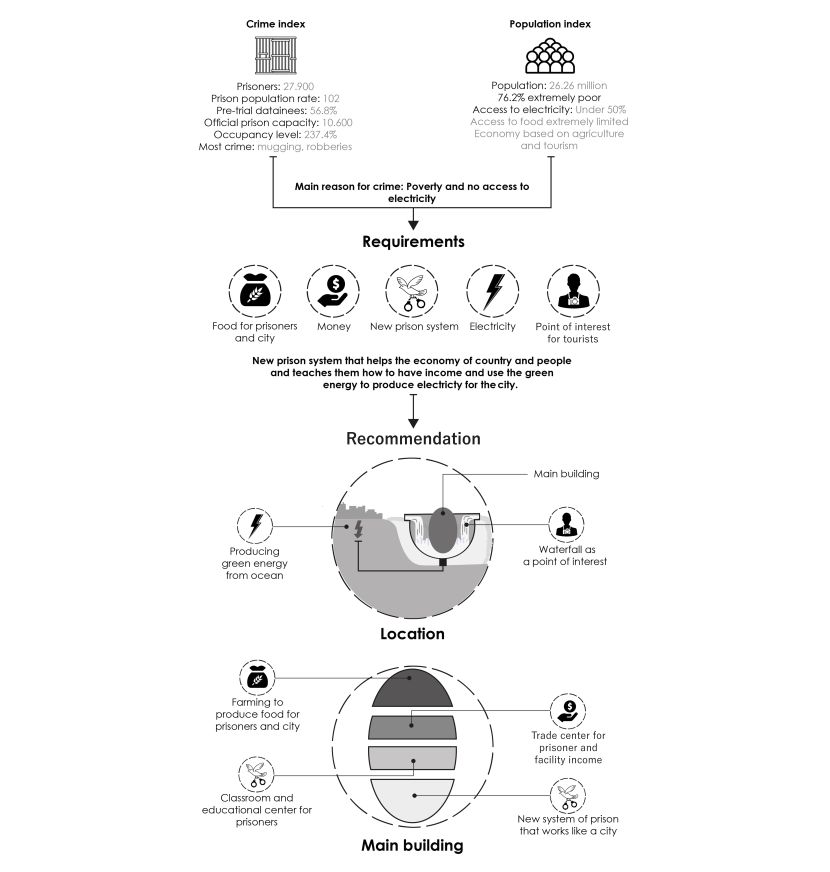
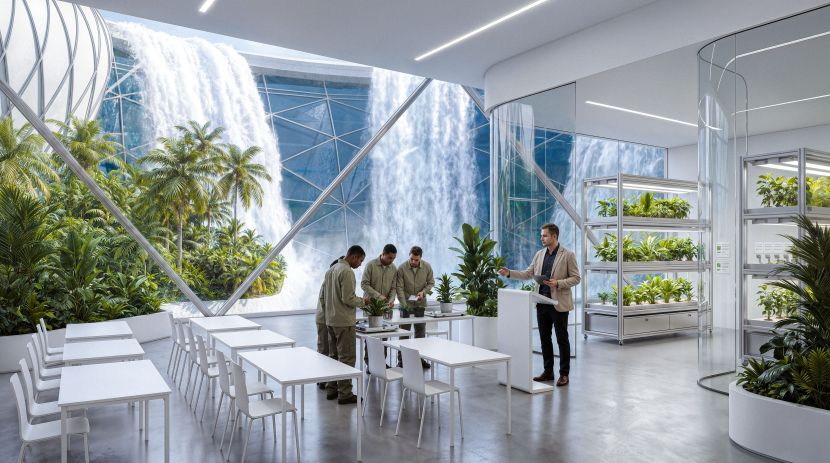
We decided to search for a location first, specifically looking at regions facing severe systemic challenges where a radical architectural intervention could offer real help. Our research led us to Madagascar. It is a country rich in natural beauty, but it suffers from severe energy shortages, which create a domino effect of economic hardship and overcrowded correctional facilities. By synthesizing these specific local problems, the idea for the Baobab Waterfall was born.
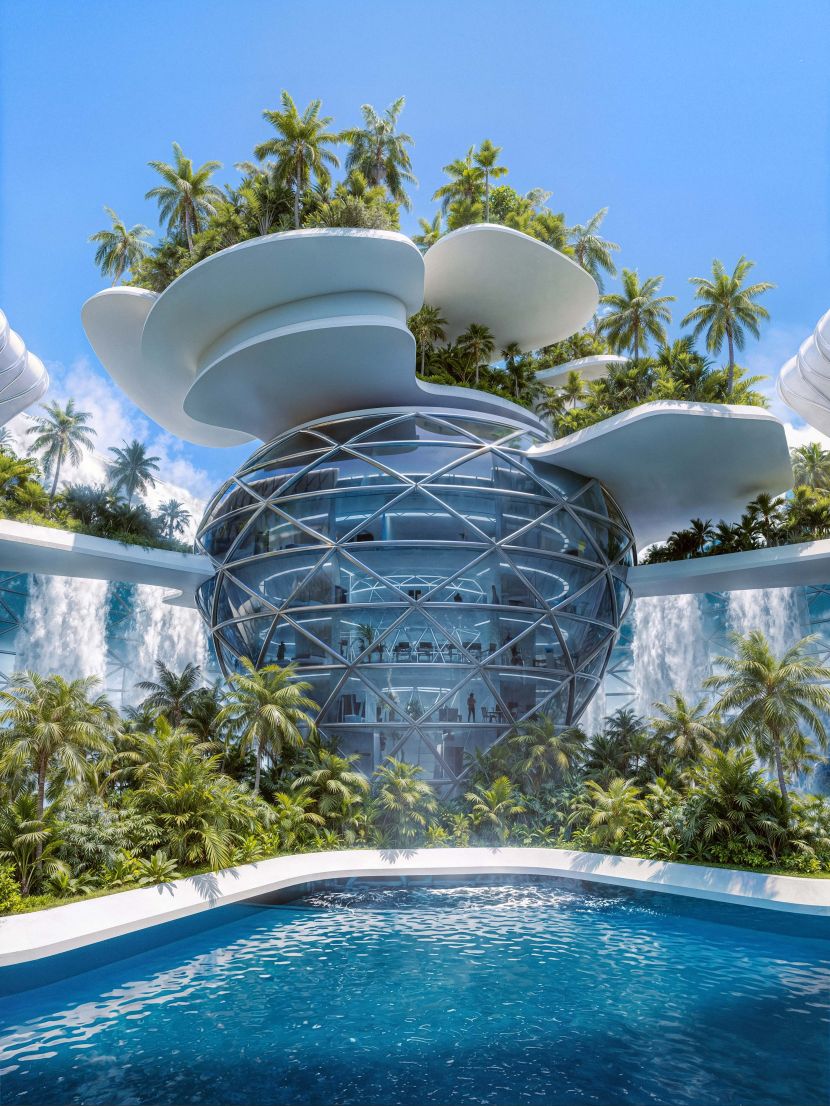
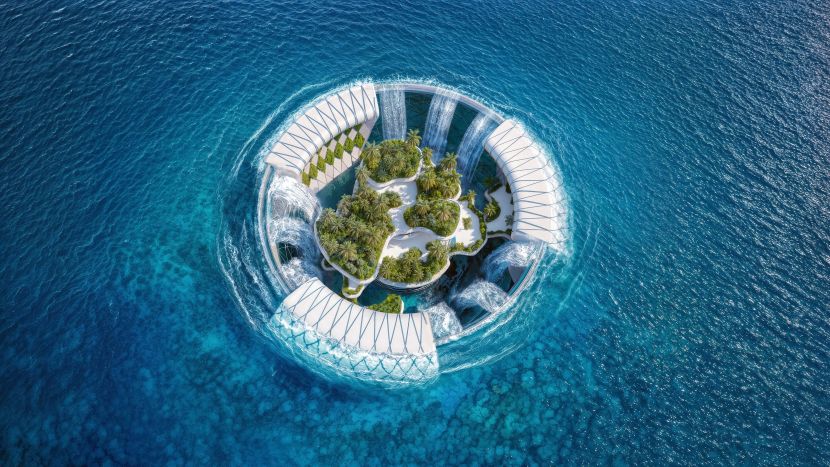
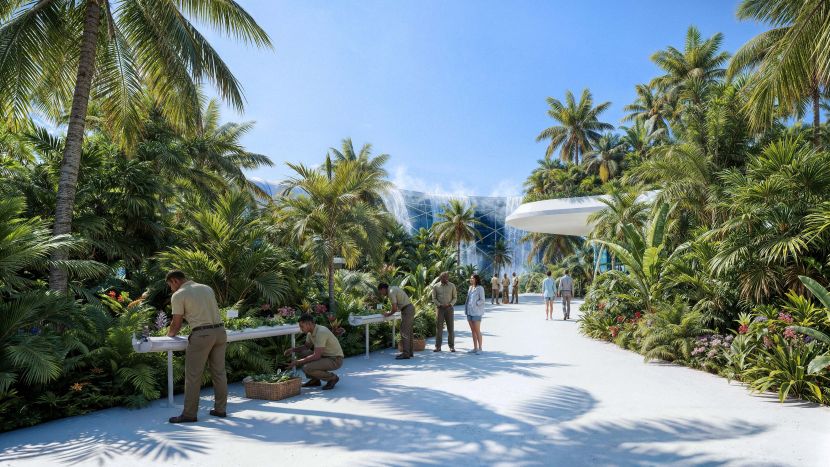
We proposed a massive, continuous system of deep ocean waterfalls designed to generate renewable electricity on a monumental scale. It acts as both a functional power plant and a spectacular architectural landmark to draw global tourism. But more importantly, it was designed as a catalyst for social renewal. It initially functions as a rehabilitation facility where residents can cultivate crops and trade with tourists, gaining vital economic skills. As the society heals, the architecture is designed to seamlessly transition into a multipurpose resort and green energy hub. The goal was to take a profound societal crisis and visualize a hyper-futuristic, yet deeply meaningful, solution.
Could you walk us through the creative process behind the project? From the initial idea to the final render, what were the key stages, and where did you spend the most time refining the image?
The defining aesthetic goal for Baobab Waterfall was to instantly transport the viewer to a radically advanced future. To capture that specific mood, I obsessed over the conceptualization, cinematic camera angles, and color harmony.
The creative process actually spans several years. We originally designed it back in 2020, spending weeks modeling across Rhino, Archicad, and 3ds Max. However, the technical hurdles at the time were massive. I spent countless hours trying to make the monumental ocean waterfalls look realistic, but those early renders just couldn't match the grand vision I had in my head.
Recently, I decided to resurrect this passion project. Because the architectural foundation was already there, the workflow this time was incredibly fast. More importantly, today’s advanced render engines and computational power have finally caught up to my imagination. With modern tools handling the heavy lifting of complex fluid physics and massive environments, I had the freedom to focus entirely on directing the scene and finally bringing the Baobab Waterfall to life.
Every ambitious project comes with unexpected challenges. What was the biggest obstacle during the creation of Baobab Waterfall, and how did you overcome it?
The biggest obstacle wasn't technical; it was purely conceptual. Absolute creative freedom in a competition can actually be paralyzing, so we spent a massive amount of time just trying to shrink those boundless possibilities into a focused architectural idea. We finally overcame this by grounding the design in a real-world problem, Madagascar's energy crisis. Once we anchored the futuristic concept to a tangible human need, the architecture naturally found its direction
How did rendering this project at the RebusFarm Render Service impact your workflow, and were there any specific features or aspects of the service that stood out to you?
RebusFarm has been a lifesaver, especially if we look back at the original version of this project in 2020. Back then, my local hardware simply couldn't handle the heavy water simulations, and I literally wouldn't have been able to render the final results without relying on RebusFarm.
Today, the biggest impact is the sheer freedom it gives my workflow. For this recent recreation of Baobab Waterfall, I needed to work remotely and was doing a lot of the heavy lifting straight from my laptop. RebusFarm turns what would normally be hours of rendering into seconds. The standout feature for me is that seamless integration; it allows me to stay mobile and focused entirely on the creative side, knowing I have a massive computational powerhouse ready whenever I hit render.
Future Outlook.
The world of architectural visualization is evolving rapidly with AI and increasingly accessible creative tools. Which of these developments do you think will have the biggest impact on artists over the next few years?
I believe the biggest impact will be the absolute speed of real-time iteration. The barrier between having a concept in your head and seeing it visually is rapidly vanishing.
In the past, testing a new lighting scenario, material, or atmospheric mood meant hours of waiting and heavy technical setup. Now, with these evolving tools, we can test a hundred different iterations almost instantly. For artists, this means total creative freedom without the penalty of time. We no longer have to settle for the 'safe' choices just to meet a deadline. I think this rapid exploration is going to result in much bolder, highly innovative architectural designs across the industry, simply because we finally have the room to experiment fearlessly.
With technology becoming more powerful every year, what do you think will continue to separate outstanding artists from everyone else?
As technology levels the playing field, simply making an image look photorealistic will no longer be a competitive advantage. What will separate outstanding artists from everyone else is taste, curation, and storytelling.
Powerful tools can generate beautiful pixels, but they cannot invent a meaningful narrative or understand the emotional weight of a space. The artists who stand out will act more like film directors. They will be the ones who use technology not as a shortcut, but as a lens to amplify human emotion, ground their designs in real architectural logic, and curate every detail to tell a compelling story. Ultimately, technology is just a tool; the soul of the image always has to come from the artist.
If you were starting your career today, what would you focus on learning first, and what would you probably ignore?
If I were starting today, I would spend vastly more time studying the fundamentals of art, photography, philosophy, and deep architectural theory. I would focus entirely on training my eye, understanding how light shapes a space, the emotional weight of an image, and the 'why' behind a design.
What I would largely ignore, or at least spend much less time stressing over, is the hyper-technical side of the software. When I started, I had to memorize a hundred different settings just to get a clean render. Today, technology handles that mechanical heavy lifting. Chasing every new software update or technical trick is a trap. The tools will always change and become easier to use, but a strong foundation in art and architectural storytelling is timeless.
What's next for you? Are there any new ideas, projects, or creative directions you're particularly excited to explore?
Looking ahead, my primary focus is to continue strengthening my core skills in architectural design, because that structural logic is the backbone of everything I create. At the same time, my passion for visualization is pulling me deeper into the realm of pure storytelling.
I am incredibly excited to expand my work beyond static imagery and step further into short animations, filmmaking, and even advertising. I am already exploring this transition through dynamic, cinematic property visualizations, and ultimately, all of this exploration is building toward a major personal milestone: I plan to open my own studio in the next couple of years. My goal is to create a space where I can fully direct these narratives, merging raw, visionary concepts with storytelling that is both cinematic and deeply emotional.
The Final Question: To wrap up, do you have any parting words or advice for the community?
First, I want to say a huge thank you to the RebusFarm team, both for having me back for this interview and for continuing to provide such incredible, reliable services. You give us the power to make our most ambitious ideas a reality.
If I could leave artists with one thought, it would be this: do not fear the rapid rise of AI and new technologies. I know there is a lot of anxiety right now about what the future holds for our field, but you have to carve out your own path through it instead of hiding from it. Whether it is a complex new render engine or an AI model, tools will always evolve. As I mentioned earlier, mastering your fundamentals (your eye for composition, lighting, and architectural logic) is infinitely more important than simply knowing how to operate a piece of software. Trust your creative voice, embrace the future, and focus on the story you want to tell.
Thank you again for having me; it has been a real pleasure sharing this space with the RebusArt community.
Thank you for sharing your insights and expertise with us!

About the artist
Ahmad Eghtesad is a 3D artist and architectural designer with a passion for transforming unbuilt spaces into evocative visual narratives. Over the past ten years, Ahmad has dedicated his craft to exploring the intersection of light, architecture, and human emotion, constantly pushing to create images that resonate on a deeper, more personal level.